
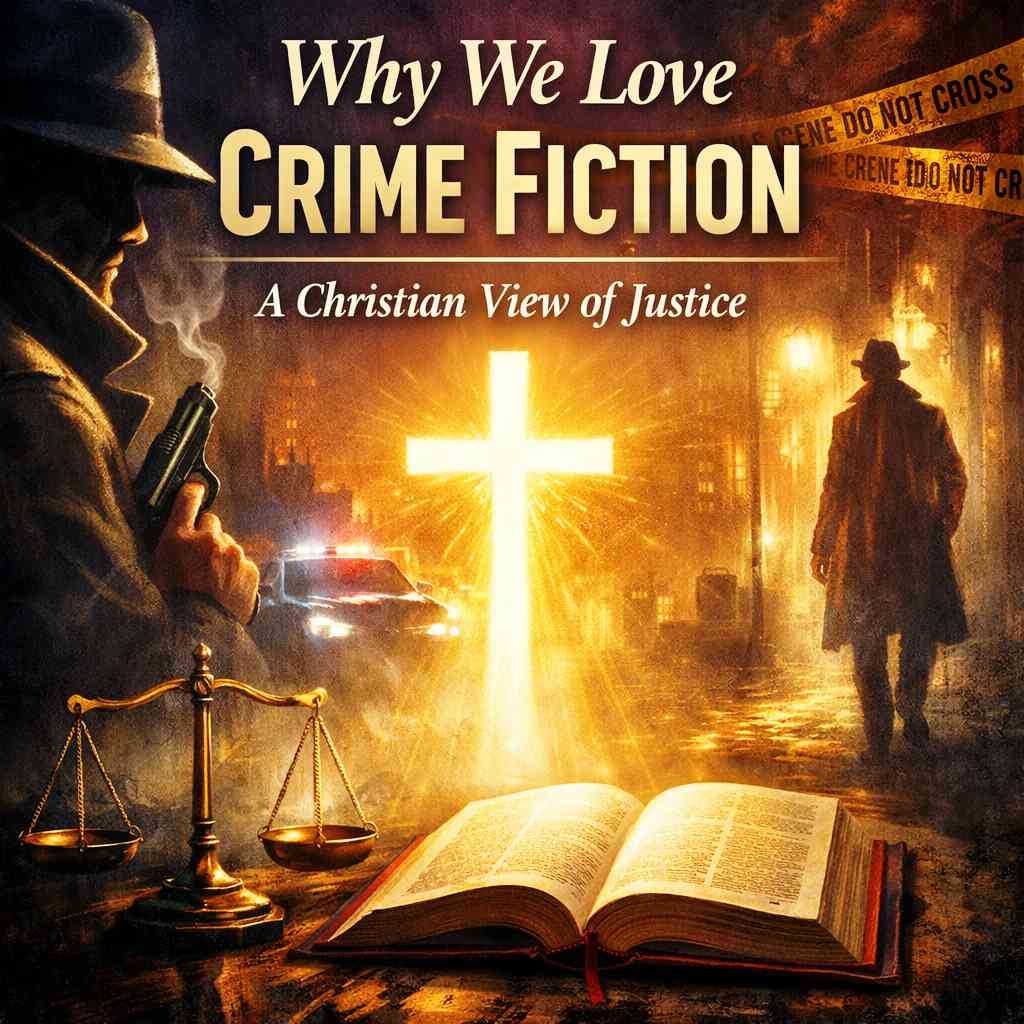
Crime fiction has captivated readers for generations. From classic detective novels to modern psychological thrillers, stories centered on crime and investigation continue to draw us in. While suspense and mystery certainly play a role, the lasting appeal of crime fiction reaches far deeper than entertainment alone. At its core lies a powerful human longing: the craving for justice.
This desire for justice is not accidental or merely cultural. From a Christian perspective, it reflects something deeply embedded in the human soul. Scripture teaches that humanity was created in the image of a just and righteous God. Our discomfort with injustice and our satisfaction when truth is revealed point to a moral awareness placed within us by our Creator. Crime fiction resonates because it echoes this inner knowledge—that wrong should not go unanswered and that truth matters.
The Deeper Appeal of Crime Fiction
Crime fiction engages readers on multiple levels. On the surface, it offers intrigue, tension, and intellectual challenge. Beneath that, however, it invites readers into a moral journey. These stories ask fundamental questions:
- What is truth?
- Who is responsible for wrongdoing?
- Can justice truly be served?
- What are the consequences of hidden sin?
As readers follow investigations and revelations, they are not simply solving puzzles. They are participating in a moral reckoning. Crime fiction allows us to witness a world where wrongdoing is named, deception is uncovered, and accountability—however imperfect—is pursued. That pursuit speaks directly to our conscience.
Justice as Moral Restoration in Storytelling
In literature, justice is often portrayed as the restoration of moral balance. When truth is exposed and wrongdoing confronted, order is reestablished. This narrative arc mirrors the human desire for resolution and righteousness.
Crime fiction frequently places readers in tension-filled spaces where truth is obscured and morality blurred. Investigators must sift through lies, motives, and human weakness to uncover what is real. Readers feel the weight of injustice alongside the characters, making the eventual unveiling of truth deeply satisfying.
This longing reflects real life. We live in a broken world where justice is often delayed, distorted, or denied altogether. Crime fiction provides a space where moral order—at least within the story—can be restored. That restoration resonates because it aligns with our God-given sense that justice should exist.
A Christian Understanding of Justice
From a biblical perspective, justice is not simply a legal concept—it is rooted in God’s character. Scripture repeatedly describes the Lord as just, righteous, and faithful. Justice flows from who God is.
Christian justice goes beyond punishment. It includes:
- truth
- accountability
- mercy
- restoration
- redemption
God’s justice does not ignore wrongdoing, but neither does it delight in destruction. It seeks to restore what sin has broken.
This understanding shapes how believers view crime fiction. When we engage with stories that wrestle with truth and accountability, we are engaging—often unknowingly—with echoes of biblical justice.
Justice and Redemption: A Shared Narrative
The Christian faith centers on the belief that justice and mercy meet perfectly in Christ. Sin is acknowledged. Truth is not hidden. Yet redemption is offered.
Many crime stories reflect this tension. Characters wrestle with guilt, conscience, and the consequences of their actions. Some seek redemption; others resist it. Some are transformed; others are hardened by their choices.
These narratives reflect real human struggle. Crime fiction often exposes the cost of deception and the burden of hidden truth, themes that Scripture addresses clearly. The Bible repeatedly warns that concealed wrongdoing weighs heavily on the soul, while confession brings freedom.
Why Resolution Matters to Us
One reason crime fiction remains so compelling is its tendency toward resolution. Mysteries are solved. Lies are uncovered. Truth comes into the light.
In real life, resolution is often elusive. Justice may be incomplete or absent. Crime fiction offers a form of moral closure that our world frequently lacks. This closure does not trivialize suffering—it acknowledges it and responds to it.
That satisfaction is not escapism alone. It reflects a deeper hope: that truth ultimately matters and that justice is not meaningless.
Conscience, Deception, and Human Nature
Crime fiction also forces readers to confront uncomfortable truths about human nature. Motives are rarely simple. Characters deceive others—and themselves. Conscience becomes a battleground.
From a Christian perspective, this aligns with biblical teaching about the human heart. Scripture acknowledges both humanity’s capacity for wrongdoing and its awareness of right and wrong. Crime stories highlight this tension vividly.
As readers observe characters wrestling with guilt, fear, and truth, they are often prompted to reflect on their own conscience. Why does deception weigh so heavily? Why does truth demand acknowledgment? These questions point beyond fiction to spiritual realities.
Subtle Christian Themes in Crime Fiction
Even when crime fiction is not overtly religious, it often explores themes consistent with Christian moral understanding:
- the cost of lies
- the burden of guilt
- the longing for justice
- the possibility of redemption
Detectives may struggle with integrity. Criminals may wrestle with conscience. Victims seek truth and closure. These narrative elements mirror spiritual truths about accountability and the human need for restoration.
Why This Matters for Christian Readers
Engaging thoughtfully with crime fiction allows believers to reflect on justice through a moral lens. These stories remind us:
- justice is not merely procedural—it is moral
- truth has consequences
- hidden wrongdoing damages the soul
- redemption requires honesty
Rather than glorifying crime, well-crafted crime fiction exposes its cost. It reveals the fragility of moral order and the human hunger for truth.
Conclusion: Justice as a Reflection of God’s Design
The human craving for justice is not accidental. It reflects the image of a just God stamped on every human heart. Crime fiction resonates because it engages this longing—sometimes imperfectly, but powerfully.
From a Christian perspective, these stories point us toward deeper truths: that justice matters, that truth must come into the light, and that redemption is possible but costly.
As readers, we are drawn not just to the mystery, but to the moral reckoning beneath it. Crime fiction reminds us that justice is not a fantasy—it is a reflection of God’s design for the world.
And while stories may resolve what real life cannot, they stir within us a hope that ultimate justice does not belong to fiction alone, but to God Himself.




No Comments