
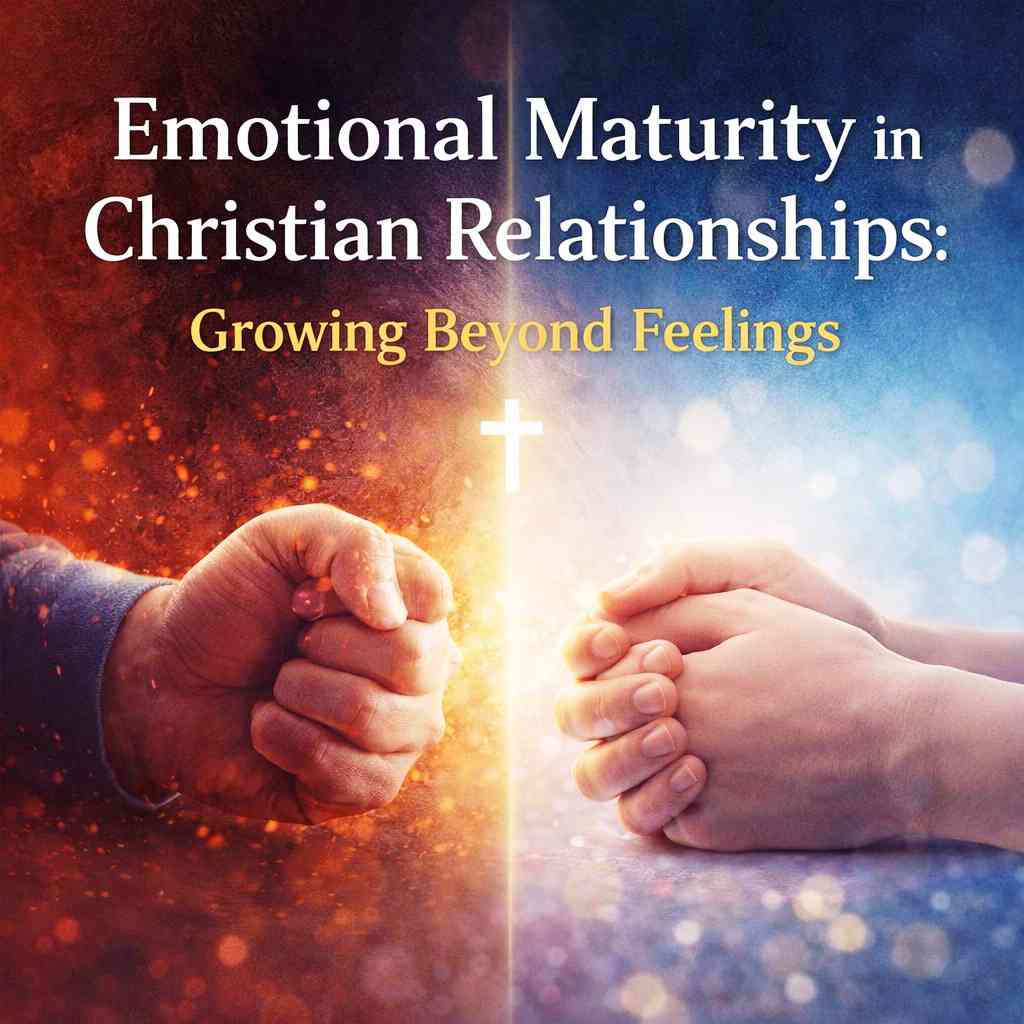
In a culture that often elevates emotions as the foundation of love, Christian relationships are called to something deeper. Feelings matter—but they are not meant to lead. Scripture consistently points us toward a love rooted in truth, shaped by character, and sustained by spiritual maturity.
Emotional maturity is what allows a relationship to move beyond instability and into strength. It transforms how we respond, how we communicate, and how we love—especially when emotions fluctuate.
This kind of maturity does not happen automatically. It is formed over time through intentional growth, self-awareness, and alignment with biblical truth.
Who Should Read This
- Christians in dating or marriage seeking healthier relationships
- Couples struggling with emotional reactions, conflict, or communication
- Anyone wanting to grow beyond “feelings-based” love
- Readers exploring the connection between faith, psychology, and relationships
What Is Emotional Maturity (From a Christian Perspective)?
Emotional maturity is the ability to:
- understand your emotions
- manage your reactions
- respond in ways that reflect Christ—not impulse
It is not about suppressing feelings.
It is about leading your feelings instead of being led by them.
Galatians 5:22–23 describes the fruit of the Spirit:
love, joy, peace, patience, kindness, goodness, faithfulness, gentleness, and self-control
These are not personality traits—they are evidence of maturity.
A spiritually mature person:
- does not react quickly in anger
- does not withdraw when things get hard
- does not rely on emotions to define love
Instead, they respond with truth, patience, and consistency.
Key Characteristics of Emotional Maturity
1. Self-Awareness
Emotionally mature people recognize:
- what they feel
- why they feel it
- how it affects others
They don’t blame others for every reaction—they reflect first.
2. Self-Regulation
They don’t let emotions control behavior.
Proverbs 29:11 says:
“Fools give full vent to their rage, but the wise bring calm in the end.”
Maturity looks like:
- pausing before reacting
- choosing calm over escalation
- responding instead of exploding
3. Empathy
Emotionally mature believers seek to understand—not just be understood.
They:
- listen carefully
- consider their partner’s perspective
- respond with compassion
4. Accountability
Instead of shifting blame, they say:
- “I was wrong”
- “I need to grow here”
This humility builds trust and safety in relationships.
5. Commitment to Growth
Mature Christians don’t stay stagnant.
They:
- pursue spiritual growth
- seek correction
- desire to become more like Christ
Building Healthy Christian Relationships
Emotional maturity is not optional—it is foundational.
Without it, relationships become:
- reactive
- unstable
- driven by feelings instead of truth
With it, relationships become:
- steady
- respectful
- deeply rooted in faith
Communication That Builds, Not Breaks
Ephesians 4:29 teaches:
“Let everything you say be good and helpful, so that your words will be an encouragement…”
Mature communication means:
- speaking with intention
- avoiding harsh or careless words
- addressing issues without attacking the person
It also means listening well—not just waiting to respond.
Forgiveness That Reflects Christ
Colossians 3:13 says:
“Forgive as the Lord forgave you.”
Emotionally immature relationships:
- keep score
- hold grudges
- revisit past wounds
Mature relationships:
- release offenses
- extend grace
- choose restoration
Forgiveness is not a feeling—it is a decision.
Patience and Understanding
Growth takes time.
Emotionally mature love allows space for:
- mistakes
- learning
- change
Instead of demanding perfection, it offers:
- support
- encouragement
- grace
Growing Beyond Feelings
Feelings are real—but they are unreliable foundations.
They change quickly:
- love today
- frustration tomorrow
- distance the next day
If a relationship is built on feelings alone, it will feel unstable.
Love Must Be Anchored in Truth
1 Corinthians 13 defines love as:
- patient
- kind
- enduring
Not:
- emotional
- reactive
- temporary
Mature love says:
“I choose you—even when I don’t feel like it.”
Commitment Over Emotion
Emotionally mature Christians understand:
- Feelings follow commitment—not the other way around
- Stability comes from choice—not mood
- Love is proven in consistency
How to Grow in Emotional Maturity
1. Deepen Your Spiritual Life
You cannot grow emotionally without growing spiritually.
Practical steps:
- daily Scripture reading
- consistent prayer
- reflection on your responses
Romans 12:2 reminds us:
“Be transformed by the renewing of your mind.”
2. Practice Self-Control Daily
Self-control is not automatic—it is trained.
Start small:
- pause before reacting
- choose calm responses
- resist emotional impulses
Over time, this builds strength.
3. Seek Wise Counsel
Proverbs 11:14:
“In the multitude of counselors there is safety.”
Healthy input from:
- mentors
- pastors
- mature believers
can reveal blind spots and guide growth.
4. Learn to Serve, Not Just Feel
Emotionally immature love asks:
“How do I feel right now?”
Mature love asks:
“How can I serve you right now?”
Service shifts focus from self to others—and strengthens relationships.
5. Embrace Humility
James 4:10 says:
“Humble yourselves before the Lord…”
Humility allows you to:
- admit faults
- grow faster
- build stronger relationships
Without humility, maturity stalls.
The Role of Faith in Emotional Growth
Faith changes how we respond emotionally.
Instead of reacting out of fear, anger, or insecurity, we:
- trust God’s plan
- seek His wisdom
- respond with peace
Proverbs 3:5–6 reminds us:
“Trust in the Lord with all your heart…”
Faith stabilizes emotions.
It gives us:
- perspective
- peace
- strength
Final Thoughts: Maturity Is the Goal
Emotional maturity is not about becoming emotionless.
It is about becoming:
- steady instead of reactive
- patient instead of impulsive
- loving instead of self-focused
It is a process—not a destination.
And it is one of the clearest signs of a Christ-centered life.




No Comments