
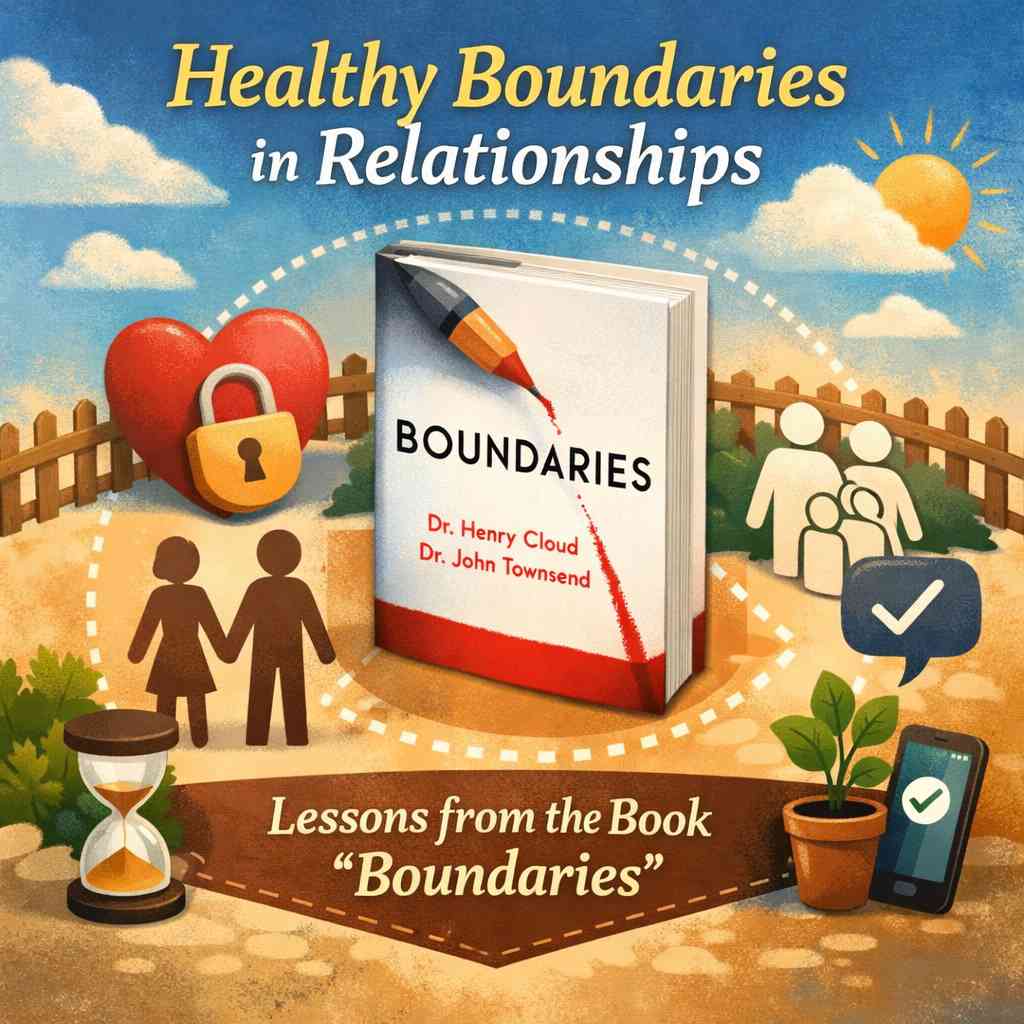
Healthy relationships don’t happen by accident — they’re built on respect, communication, and clearly defined boundaries. Whether in marriage, friendships, family life, or dating, boundaries protect emotional health while allowing love to grow in a balanced way.
One of the most helpful resources on this topic is Boundaries by Henry Cloud and John Townsend. The book teaches that boundaries aren’t about pushing people away — they’re about creating healthy space where relationships can thrive.
Let’s explore what healthy boundaries are, why they matter, and how to apply them in everyday relationships.
What Are Healthy Boundaries?
Boundaries are the personal limits we set to define how others treat us — emotionally, physically, mentally, and spiritually.
They help you:
• protect your well-being
• communicate expectations clearly
• maintain your identity
• prevent resentment
• build mutual respect
Healthy boundaries are not rigid walls. They are flexible, thoughtful limits that encourage both closeness and individuality.
Why Boundaries Are Essential for Strong Relationships
Without boundaries, relationships often drift into:
• emotional exhaustion
• misunderstandings
• unhealthy dependence
• unspoken resentment
With healthy boundaries, relationships experience:
✔ respect
✔ honesty
✔ balance
✔ emotional safety
✔ long-term stability
Boundaries allow love to grow without sacrificing personal health.
Key Lessons from the Book “Boundaries”
🛡 Boundaries Protect Emotional Health
The book emphasizes that each person is responsible for their own thoughts, feelings, and choices.
Healthy boundaries:
• prevent emotional overload
• stop manipulation
• reduce burnout
• encourage personal responsibility
You can care deeply without carrying someone else’s emotional weight.
🤝 Boundaries Create Mutual Respect
When expectations are clear, people know how to treat one another.
Boundaries:
• encourage honest communication
• reduce conflict
• build trust
They create a safe environment where both people feel heard and valued.
🌱 Boundaries Preserve Individual Identity
Strong relationships don’t erase individuality.
Healthy boundaries allow you to:
• pursue personal goals
• maintain friendships
• honor your values
• grow emotionally
Love should support growth — not replace identity.
How to Set Healthy Boundaries in Relationships
1. Reflect on Your Needs
Ask yourself:
• What makes me uncomfortable?
• When do I feel drained or resentful?
• What do I need to feel respected?
Self-awareness is the foundation of boundary-setting.
2. Communicate Clearly and Kindly
Use calm, honest language:
“I need time to recharge after work.”
“I’m not comfortable with that.”
“I value our relationship, but I need this boundary.”
Clarity prevents confusion and conflict.
3. Stay Consistent
Boundaries only work when upheld.
Consistency:
• reinforces respect
• builds trust
• prevents manipulation
Changing limits constantly creates mixed signals.
4. Practice Self-Care
Healthy boundaries are easier to maintain when emotional needs are met.
Prioritize:
• rest
• prayer
• reflection
• healthy routines
Strong emotional health strengthens boundary strength.
5. Be Willing to Adjust When Needed
Life changes — and boundaries can too.
Open communication allows relationships to grow while maintaining respect.
Practical Examples of Healthy Boundaries
💬 Emotional Boundaries
• expressing feelings openly
• not absorbing others’ stress
• setting limits on emotional labor
🧍 Physical Boundaries
• respecting personal space
• honoring comfort levels
• communicating physical preferences
⏰ Time Boundaries
• balancing personal and relationship time
• protecting rest and hobbies
• managing commitments wisely
💰 Material Boundaries
• clear expectations around finances
• respecting possessions
• discussing shared responsibilities
Faith-Based Wisdom on Boundaries
Scripture supports the importance of wisdom, self-control, and healthy limits.
Biblical principles include:
• loving others while valuing yourself
• speaking truth with kindness
• guarding emotional well-being
• practicing respect
Boundaries allow love to flourish without enabling harm.
How Boundaries Strengthen Love (Not Weaken It)
Some fear boundaries will push people away — but healthy boundaries actually deepen connection.
They:
✔ reduce resentment
✔ increase trust
✔ improve communication
✔ support emotional health
✔ create lasting stability
Love grows best in environments of clarity and respect.
How This Connects to Christ-Centered Relationships
Healthy boundaries support the kind of sacrificial, respectful love explored in Christ-Centered Love vs. Modern Romance Expectations — where love is built on commitment, wisdom, and emotional maturity rather than fleeting feelings.
They also lay the foundation for strong, lasting relationships like those portrayed in uplifting stories such as Redeeming Love, where growth and healing transform connection over time.
Final Thoughts
Healthy boundaries aren’t about distance — they’re about balance.
They protect emotional health, strengthen respect, and create space for love to grow deeper and stronger.
By learning to set clear, compassionate boundaries, you build relationships that are:
❤️ supportive
🌿 emotionally healthy
🤝 respectful
✨ long-lasting
When boundaries are rooted in wisdom and love, relationships don’t weaken — they thrive.




No Comments